Cannabis vs Antidepressants
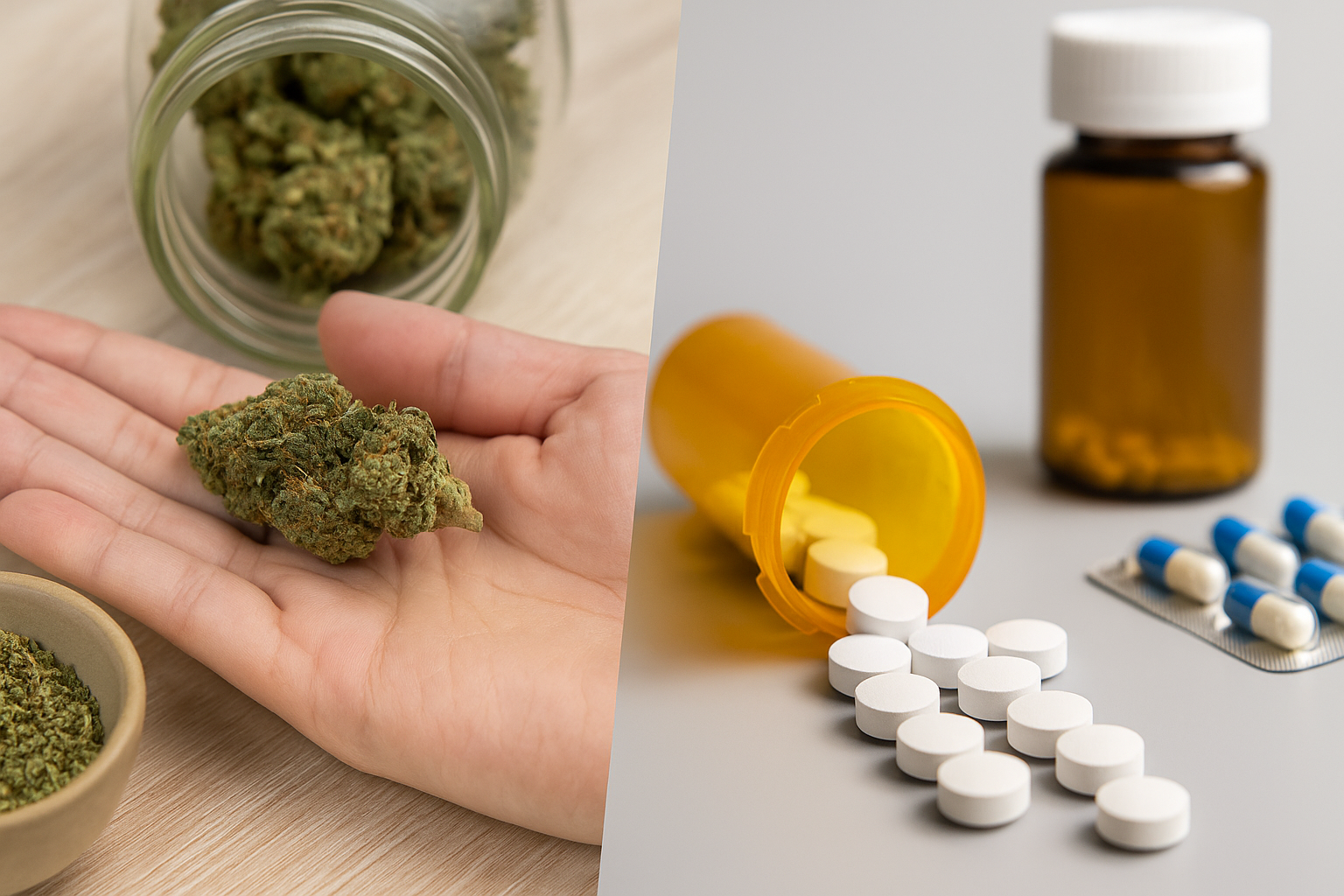
You’re here because something hurts. You’re here because you typed a version of this question into a late-night search bar, alone in a quiet house, when the weight of simply being alive feels unbearable. You’re looking for a lifeline. And what you find are two very different paths: the calm, clinical certainty of a doctor’s office on one side, and the urgent, whispered advice of strangers on message boards on the other. One offers a slow, careful rebuilding of the self; the other promises a quicker but more unpredictable shift in how you experience the world. So instead of choosing a “winner” in the conversation around Cannabis vs. antidepressant medications, let’s speak honestly about what each path truly asks of you.
The Pharmaceutical Promise: A Quiet, Padded Room
Let’s start with antidepressants. The essence of the promise there is one of quiet. Stability. If your mind is a constant, turbulent storm of self-blame, fear, and a thick, crushing dread, the concept of a motionless, soundproof room is heaven. That is the implicit promise of the drug path, and it’s often at the center of discussions about Cannabis vs. antidepressant medications. A physician, with clinical information in hand, hands you a key—a humble, little pill—and the promise that if you simply take it, every day, you may one day find yourself sitting in that peaceful room, the screaming winds of your mind finally stilled.
It’s a long lesson in waiting and trust. It requires relinquishing a level of control and trusting in the gradual, invisible hand of chemistry. You’re handing over the keys to your brain, the seat of you, hoping that a slow rebalancing of neurotransmitters will get you back on firm ground. For millions, it does. It isn’t always easy—there’s almost always that pesky wait time and a testing of early side effects—but it concludes with relief. The door opens on that quiet room, and the nagging, wailing noise of their disease is finally gone. They have the stability again to hold a job, sit with their family, just be there without a chronic, debilitating inner struggle.
But there’s a price for living in a room that’s just too quiet. In stifling the storm, you sometimes drown out the other beautiful sounds of life. That rich, swelling orchestra of simple pleasure, the growl of creative fire, the laugh that makes your gut hurt and your eyes tear up—all of that can sound distant, like it’s on the other side of a thick, glass wall. The room is safe, definitely. But it can also be isolating. You’re protected from the sharpest points of your pain, but you might also lose the beautiful, messy, highly textured tapestry of a whole life. Not experiencing pain, you find, isn’t necessarily the same thing as experiencing joy. That’s the compromise: for safety from the debilitating lows, you might have to forgo the brilliance of the highs.
The Natural Alternative: The Open, Wild Cannabis Field
And now, let us go on the other trail, the one leading towards what best might be called a vast, arbitrary, and unruly field. While antidepressants give you a silent room, cannabis gives you the very opposite. It does not promise to calm the storm. It guarantees changing your relationship with it to know how to dance during the rain, or even fly on the currents.
The best part about cannabis is the immediacy and the powerful sense of mastery that it affords. You’re not flipping out, waiting weeks for something to happen while a drug builds up inside you; you are doing it yourself, at least on a limited level. The effects aren’t something that happens way down the road; they’re a direct, tangible experience that happens under your own eyes. This path goes through your body’s own endocannabinoid system, an older, extremely sophisticated apparatus that helps regulate almost everything that matters: mood, sleep, stress, and appetite. You are not working against a malfunctioning system; you are working with it. You are joining with your body, not doing a number on it.
This can be an amazingly intoxicating type of freedom. You’re the curator of your own mind. You can discover how to select a particular strain with a certain set of cannabinoids and terpenes to suit the special weather within your head at any particular time. A mild, CBD-dominant strain may dispel the stifling haze of morning anxiety. A mood-uplifting sativa may be what gets you going to overcome the weighty lethargy of depression. You’re no longer just a patient; you’re an explorer, learning the intricate terrain of your own consciousness. For many, that act of self-reliance is a powerful medicine in itself.
But a wild field has no fences. That liberty to experience everything once more entails you’re also vulnerable to the thorns, the concealed ditches, and the unexpected, horrific thunderstorms of paranoia and fear that the incorrect strain or excessive dose might trigger. This journey isn’t edited or uniform. The equipment is not standardized as drugs are. You are 100% in charge of your own wayfinding, and it’s grotesquely simple to become lost. This route requires ongoing awareness, a whole lot of research, and a hard-nosed friendship with your own limitations.
The Right Question: What Are You Going to Give Up?
So let’s ditch the meaningless question of “which is best.” A more authentic, exposed, and helpful question is this: What am I willing to trade for my peace of mind?
Because there is always a trade involved.
The treatment with antidepressants might force you to trade the rich high points and low points of your emotional life for a firm, stable plateau. You might be trading richness for dullness, short-term mastery for ultimate stability.
The cannabis regimen might invite you to trade the certainty of a clinically established regimen for the exhilarating, if necessarily perilous, freedom of self-treatment. You might be trading routines for tastes the sanatorium room for the open plain.
The correct response for you only hinges on where you happen to be. Are you in a situation so chaotic, so frayed, that the security of a quiet, unmoving, padded room is the kindest and most essential thing that you can do for yourself? Then the organized care of an antidepressant, with a doctor’s oversight, could be the most prudent place to begin.
Or are you resilient enough to stand, but simply desperate for the warmth of the sun on your skin again, to experience anything deeply? Are you prepared to risk a few potential storms in exchange for regaining the simple joy of skipping through a clear pasture? Then the experiential, active encounter with cannabis might be the path you need to take.
Conclusion
This isn’t a sentence for the rest of your life. Healing doesn’t mean finding a room or a corner to hide in forever. Healing is movement—shifting, unfolding, evolving. You might need the safety of that quiet room for a while, a place to gather yourself, mend your sails, relearn how to breathe. And then one day, with steadier hands and clearer eyes, you may feel strong enough to lift the latch and step outside again, carrying what you’ve learned, testing yourself gently against the weather.
And whatever you choose—whether you’re exploring Cannabis vs. antidepressant medications or something entirely different—please don’t walk this path alone. It matters too much. Find a doctor, a therapist, a mental health professional who can help you navigate the intricate terrain of your own mind with compassion and without judgment. Because the real beginning of healing isn’t the moment you choose a pill or a plant; it’s the moment you decide, against every difficulty, to fight for your own well-being.
FAQs
Is cannabis a safe replacement for antidepressant medication?
Cannabis is not a substitute for prescribed antidepressants. While some people may find temporary relief from anxiety or low mood, cannabis can also make symptoms worse, cause paranoia, or disrupt sleep. This varies based on the dose, strain, and the person's sensitivity. Antidepressants are clinically studied, regulated, and monitored, making their effects more predictable, even though they have limitations. Anyone thinking about changing their medication or using cannabis should talk to a healthcare professional first.
Why do antidepressants sometimes make people feel emotionally "numb"?
Some people feel emotionally dull—having fewer highs and lows—when taking certain antidepressants. This happens because the medications affect the brain chemicals that help us process emotions. Not everyone experiences this side effect, and it can often be improved by adjusting the dose or trying a different medication with a doctor's help. If this numb feeling is bothersome, it's important to talk to your doctor.
Can cannabis and antidepressants be used together?
Cannabis can interact with some antidepressants and may increase side effects like dizziness, drowsiness, anxiety, or changes in heart rate. It might also change how the body processes these medications, affecting how well they work. If you are considering using both, it's important to talk to a doctor or pharmacist to understand the risks and make informed choices.
How do I know which approach—cannabis, antidepressants, therapy, or something else—is right for me?
The proper treatment depends on your symptoms, medical history, lifestyle, and safety needs.
- If you feel overwhelmed, cannot function, or have severe depression that lasts, a doctor-guided treatment with antidepressants and therapy is often the safest starting point.
- Suppose you are stable and want to manage your mood. In that case, some people consider using cannabis. Still, it is best to have medical guidance, especially if you have mental health issues.
- Many people use a mix of therapies, lifestyle changes, and medication, adjusting their approach over time. The most important thing is to work with a professional throughout the process.
What should I do if I'm struggling and don't know where to start?
You don't have to choose your path alone. The first step is to talk to a mental health professional or your primary care provider. They can help you understand the risks and benefits of options like cannabis, antidepressants, therapy, or others that may suit you. If you're feeling very upset or unsafe, please get in touch with a crisis hotline or local emergency services right away. Support is available, and you deserve it.