Massachusetts residents may face a significant decision at the ballot box in November 2026. A citizen-initiated proposal called “An Act to Restore a Sensible Marijuana Policy” is working its way through the state’s legislative process, and it could fundamentally reshape the cannabis landscape in the Commonwealth.
This guide breaks down everything you need to know about the initiative—what it proposes, where it stands procedurally, and what it could mean for the future of marijuana in Massachusetts.
Quick Answer: What the Act Would Do and When Voters May See It
“An Act to Restore a Sensible Marijuana Policy” is a 2026 ballot initiative designed to roll back adult use cannabis legalization in Massachusetts. If approved, the measure would undo key provisions that massachusetts voters approved back in 2016.
In plain language, the proposal would:
- Repeal commercial recreational marijuana sales, effectively closing adult-use dispensaries
- End home cultivation rights for adults, which currently allow up to six plants per person
- Replace the existing regulatory framework with a limited non-criminal possession structure
The petition is currently before the Massachusetts Legislature. If state lawmakers choose not to enact it by May 5, 2026, backers can pursue a second round of signature gathering to place the measure on the November 3, 2026 statewide ballot.
Here’s a quick summary of what the Act would change:
- Commercial sales: Eliminated for recreational marijuana
- Home growing: Prohibited for personal use
- Possession: Up to one ounce allowed without penalty; civil penalty for amounts between one and two ounces
- Medical marijuana: Remains legal but could face new restrictions through companion legislation
The medical marijuana access program would remain intact under the Act’s primary provisions, though a related initiative could impose potency limitations on medical cannabis products.
Background: How Massachusetts Got to This New Marijuana Policy Fight
To understand this ballot measure, you need to understand how Massachusetts became one of the first East Coast states to embrace marijuana legalization.
In November 2016, massachusetts voters approved Question 4 with 53.7% voting “yes.” This voter approved measure legalized recreational cannabis for adults 21 and older, permitted home cultivation, and set the stage for a regulated commercial market.
The following year brought implementation legislation through House Bill 3818, which:
- Established the Cannabis Control Commission to oversee the new industry
- Raised marijuana excise taxes beyond what the ballot measure specified
- Created local control rules allowing cities and towns to opt in or out of hosting cannabis businesses
- Set licensing process requirements for cultivators, retailers, and manufacturers
The legal market launched in November 2018 when the first two adult use recreational dispensaries opened—making Massachusetts home to the first recreational marijuana retailers on the East Coast.
Key milestones since legalization:
- November 2018: First adult use sales begin
- 2022: Annual tax revenue from adult-use cannabis exceeds $200 million
- 2025: Cumulative legal cannabis sales surpass $10 billion statewide
- 2025: Annual recreational cannabis sales reach approximately $1.65 billion
So why are some groups now pushing for repeal? Supporters of the rollback cite concerns about youth access to high-potency products, increases in emergency room visits linked to cannabis, neighborhood impacts from dispensary operations, and what they view as excessive commercialization of marijuana sales.
What Is “An Act to Restore a Sensible Marijuana Policy”?
The Act is a citizen-initiated state statute submitted through Massachusetts’ initiative petition process for the 2026 election cycle. Its formal title is “An Act to Restore a Sensible Marijuana Policy.”
The initiative’s primary goal is ending the commercial adult-use cannabis market and banning home cultivation that voters approved in 2016—while still allowing limited possession for adults. This isn’t a return to full prohibition but rather a significant scaling back of commercialization.
Understanding the initiative requires knowing that it’s part of a coordinated effort:
- First initiative: Eliminates recreational marijuana sales and home grows (the primary Act)
- Second initiative: Addresses THC potency limitations for medical cannabis products (filed separately)
The campaign backing these proposals includes organizations such as the Coalition for a Healthy Massachusetts and other public health–focused advocacy groups. These stakeholders frame the initiative as a course correction to address unintended consequences of commercialization.
For readers who want to review the statutory language, the full legal text is publicly available through the Massachusetts Attorney General’s office and the Secretary of the Commonwealth’s websites.
Key Provisions of the Act
If approved, the Act would make substantial changes to the General Laws governing cannabis in Massachusetts. Here’s what each major provision would mean for adults 21 and older:
Repeal of Commercial Adult-Use Market
The Act would eliminate authorization for licensed recreational marijuana retailers, cultivators, manufacturers, and delivery operators. This means:
- All adult-use dispensaries would close by a specified implementation date
- Cultivation facilities serving the recreational market would lose their licenses
- Product manufacturers, testing labs, and delivery services would cease non-medical operations
End of Home Cultivation Rights
Current law allows adults to grow up to 6 plants per person and 12 per household for personal use. Under the Act:
- Home cultivation for personal use would be prohibited
- Penalties would be reinstated for unlawful growing
- The 12-plant household maximum would no longer apply
Possession Rules Under the Proposed Framework
| Amount | Current Law | Under the Act |
|---|---|---|
| Up to 1 ounce | Legal in public | Legal, no penalty |
| 1–2 ounces | Legal (10 oz at home) | Civil penalty |
| Over 2 ounces | Varies by amount/location | Potential criminal consequences |
Adults could legally possess up to one ounce of marijuana without penalty. Possession of less than two ounces (but more than one) would trigger a civil penalty rather than criminal charges. Amounts above that threshold could carry more serious consequences.
Rules for Individuals Under 21
For minors and young adults under 21, the Act would maintain or tighten existing penalties while emphasizing prevention and treatment over incarceration. Diversion programs would continue to be available.
Medical Program Interaction
The medical marijuana program would remain in place. However, if the companion initiative also advances, new restrictions such as maximum THC limits on certain medical cannabis products could take effect.
How the Act Differs from Current Massachusetts Marijuana Laws
The contrast between today’s cannabis policy and what the Act proposes is stark. Here’s a direct comparison:
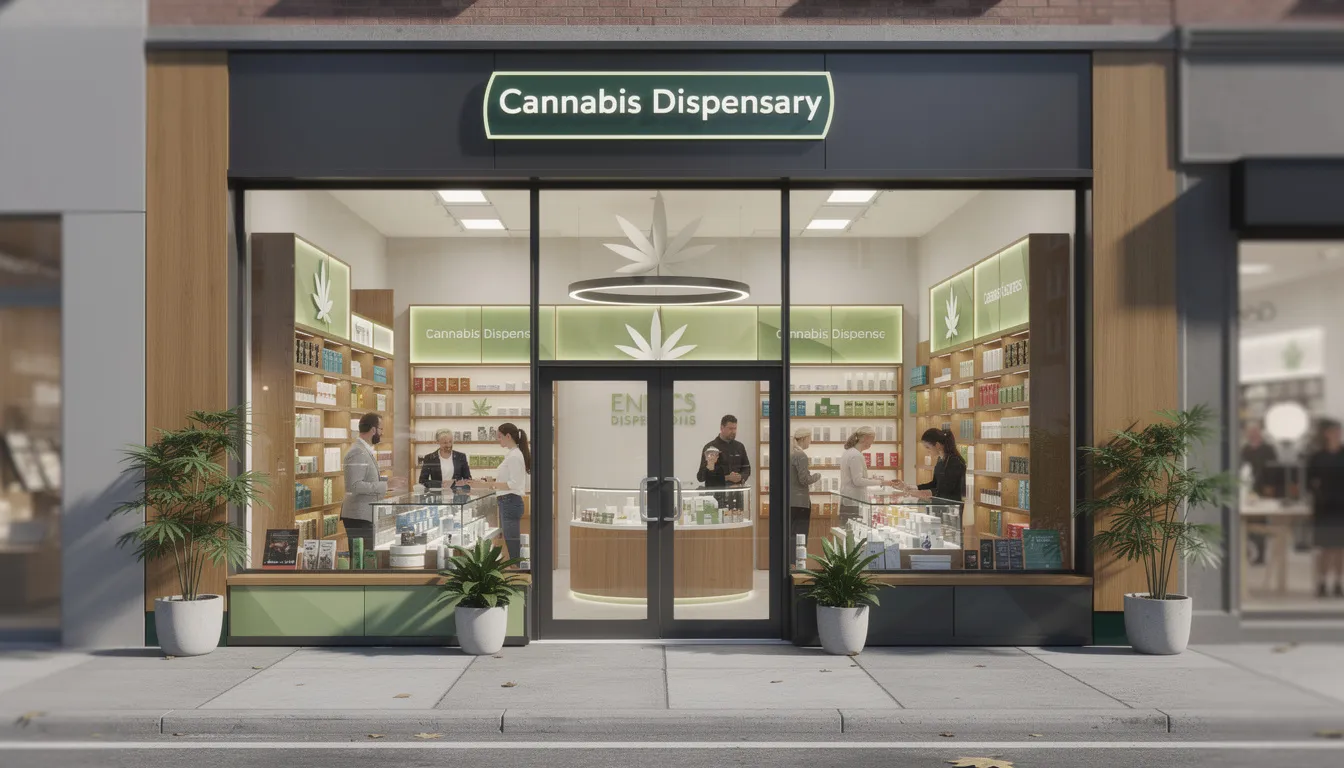
Current Law (Post-2016 Legalization)
- Regulated adult use sales in licensed dispensaries statewide
- Legal possession of up to 1 ounce in public, up to 10 ounces at home
- Home cultivation of up to 6 plants per adult (12 per household)
- Social equity licensing provisions to address past drug war harms
- Cannabis Control Commission oversight of hundreds of licenses
- Local municipalities can opt in or out of hosting dispensaries
Proposed Law Under the Act
- No commercial adult-use stores permitted
- No legal home grows for personal use
- Simple possession-only structure: up to 1 ounce with no penalty
- Civil sanctions for possession of less than two ounces above the one-ounce threshold
- Social equity provisions lose their commercial foundation
- Medical cannabis framework remains but potentially faces new limits
One critical difference: Massachusetts would become one of the first states to significantly reverse a voter-approved adult-use market. While the national trend has been toward expanding cannabis legalization, this Act represents movement in the opposite direction.
The social equity implications are particularly significant. Current law includes economic empowerment provisions designed to help communities disproportionately affected by past cannabis enforcement. Without a commercial market, these programs would effectively lose their purpose.
Ballot Initiative Process and Where the Act Stands Now
Massachusetts uses what’s called an indirect initiated statute process. This means both voters and the legislature have roles before a measure reaches the ballot.
Here’s how the process works and where this Act currently stands:
Step 1: Attorney General Review
Before any signature gathering can begin, the Attorney General must certify that the measure meets constitutional standards. For this Act, that certification occurred in 2024, clearing the path for the petition drive.
Step 2: Initial Signature Collection
Supporters gathered signatures across the Commonwealth. The Secretary of the Commonwealth certified 78,301 valid signatures—exceeding the threshold of approximately 74,000 (3% of votes cast in the last gubernatorial election).
Step 3: Legal Challenge
Opponents filed a challenge at the State Ballot Law Commission, alleging that some voters were misled by signature gatherers. The Commission reviewed the case and ultimately ruled there was absolutely no admissible evidence sufficient to disqualify 3,727 or more signatures. With this challenge overruled, the petition moved forward.
Step 4: Legislative Review (Current Phase)
The petition has been transmitted to the Massachusetts Legislature, which now has until May 5, 2026, to:
- Adopt the measure exactly as written
- Propose an alternative version
- Take no action
Step 5: Potential Second Signature Round
If the legislature chooses not to enact the proposal, supporters can collect an additional 12,429 valid signatures (0.5% of the last gubernatorial election vote) by a July 2026 deadline.
Step 6: November 2026 Ballot
If all requirements are met, the question appears on the November 3, 2026 general election ballot for voter approval or rejection.
Signature Requirements and Key Deadlines
Understanding the numbers is essential for tracking this initiative’s progress:
| Requirement | Threshold | Status |
|---|---|---|
| First-round signatures | ~74,000 (3% of gubernatorial vote) | ✓ Met (78,301 certified) |
| Second-round signatures | 12,429 (0.5% of gubernatorial vote) | Pending (if needed) |
| Legislature deadline | May 5, 2026 | Upcoming |
| Second-round deadline | July 2026 | Upcoming (if applicable) |
| Election date | November 3, 2026 | Upcoming |
Key dates to remember:
- 2024: Initial filing and AG certification completed
- December 3, 2025: Deadline for submitting first-round signatures
- May 5, 2026: Legislature must act or decline
- July 2026: Second-round signature collection deadline
- November 3, 2026: Potential election day
Certified signatures must come from registered Massachusetts voters distributed across multiple counties, with geographic rules limiting how many can come from any single county.
Arguments, Public Opinion, and Key Stakeholders
Public debate over the Act centers on health, safety, economics, and criminal justice concerns. Both supporters and opponents have organized campaigns to make their case.

Arguments From Supporters
Those backing the Act—including the Coalition for a Healthy Massachusetts and allied organizations—emphasize:
- Reducing youth exposure to cannabis products and marketing
- Addressing concerns about high-THC products and related emergency room visits
- Limiting neighborhood impacts from dispensary operations
- Belief that scaling back commercialization will improve public health outcomes
- Concerns that the current market has grown beyond what voters originally envisioned
Supporters have offered supporting arguments centered on public health data and claim the 2016 measure has had unintended negative consequences.
Arguments From Opponents
Those opposing the Act—including MassCann, industry associations, and civil liberties groups—counter with:
- Fear of reviving aspects of prohibition and associated enforcement
- Potential resurgence of the illicit market if legal options disappear
- Loss of significant tax revenue and industry jobs
- Concern that renewed criminal penalties may disproportionately affect Black and brown communities
- Belief that the anti cannabis campaign ignores the will of voters who approved legalization
Opponents have pushed back against what they characterize as unsupported allegations about the industry’s harms.
What Polling Shows
Surveys from July 2023 indicated roughly 80% of Massachusetts voters support legal cannabis in some form. However, attitudes toward rolling back commercial sales specifically are less settled. This suggests that while broad support for legalization exists, voters may be more conflicted about the specific commercial model.
Key Stakeholders
- Advocacy groups (MassCann, NORML chapters) opposing recriminalization
- Coalition for a Healthy Massachusetts supporting the Act
- Local officials concerned about cannabis tax revenue
- Public health experts on both sides of the debate
- Patient organizations in the medical program
- Cannabis industry employees and business owners
Economic, Legal, and Community Implications
The Act’s passage would trigger significant ripple effects across the Commonwealth.
Jobs and Industry Impact
Repealing adult use sales would likely close many recreational dispensaries, directly affecting thousands of jobs in:
- Cultivation operations
- Retail sales
- Product manufacturing
- Transportation and delivery
- Security services
- Ancillary businesses (packaging, marketing, legal services)
Tax Revenue Consequences
Adult-use cannabis generated more than $200 million in tax revenue in 2022 alone. The legal market has been an important funding source for state and local programs. Eliminating commercial sales would sharply reduce this revenue stream.
Legal System Changes
Activities currently legal would again carry penalties:
- Home cultivation could result in criminal charges
- Possession above one ounce could trigger civil or criminal consequences
- Some product types might become illegal
- Police and court workloads could increase
Municipal Budget Effects
Some communities could face budget gaps from lost cannabis excise and local-option taxes, while others might welcome fewer dispensaries and less cannabis advertising in their neighborhoods.
Equity and Justice Concerns
Social justice advocates worry that rolling back legalization without comprehensive expungement and equity measures could re-intensify enforcement disparities that existed prior to 2016. Communities that bore the brunt of prohibition-era enforcement could again face disproportionate impacts.
The Role of the Cannabis Control Commission if the Act Passes
The Cannabis Control Commission is the independent state agency created after Question 4 and H.3818 to oversee licensing, compliance, and enforcement for both medical cannabis and adult-use cannabis programs.
Current CCC Responsibilities
Under existing law, the Commission regulates:
- Hundreds of adult-use licenses (retail, cultivation, manufacturing, testing labs)
- The medical marijuana program
- Social equity initiatives and licensing priorities
- Compliance and enforcement actions
- Consumer safety standards and product testing
Potential Changes Under the Act
If the Act passes, the CCC’s responsibilities would contract significantly. The Commission would primarily be responsible for:
- Overseeing the medical program
- Coordinating with law enforcement on possession enforcement
- Managing any transition period as adult-use operations wind down
- Potentially implementing new restrictions on medical products
Existing CCC Challenges
The Commission has faced criticism over processing times, technology limitations, budget constraints, and equity implementation. A market contraction could amplify some challenges while alleviating others.
Ongoing Legislative Reform Discussions
The state legislature has been considering various CCC reforms, including proposals to:
- Change commission size and structure
- Adjust ownership caps for licensees
- Tighten rules for hemp-derived intoxicating products
These discussions may intersect with or run parallel to the Act’s fate.
Timeline: What Happens Next and When Voters Decide
The Act is on a multi-year track aimed at the November 3, 2026 general election. Here’s where things stand and what comes next:

Current Status (Where We Are Now)
- ✓ Attorney General certification completed (2024)
- ✓ First-round signatures gathered and validated
- ✓ State Ballot Law Commission rejected objections to the petition
- ➤ Petition transmitted to Legislature for review
What Happens Next
| Date | Action |
|---|---|
| Now through May 5, 2026 | Legislature reviews; may enact, propose alternative, or take no action |
| If legislature doesn’t enact | Supporters launch second-round signature drive |
| By July 2026 | Second-round deadline (12,429 additional signatures needed) |
| November 3, 2026 | Potential ballot question if all thresholds met |
| Implementation date (if passed) | Specified in final text (e.g., January 1, 2028) |
What Voter Approval Would Mean
If the measure appears on the 2026 ballot and a simple majority (more than 50%) votes “yes,” the new law would take effect on the implementation date specified in the final text. This would give:
- Dispensaries time to wind down operations
- Regulators time to adjust programs and enforcement
- Consumers time to understand the new rules
The final round of this process rests with Massachusetts voters, who will have the opportunity to maintain decriminalization while deciding whether to continue or end the commercial market.
Summary: Why the Act Matters for the Future of Marijuana Policy in Massachusetts
“An Act to Restore a Sensible Marijuana Policy” represents the most significant potential change to marijuana policy in Massachusetts since 2016. If approved, it would reverse key parts of the cannabis legalization framework by ending commercial adult use sales and home grows while preserving limited possession rights and the medical program.
The initiative has cleared major procedural hurdles and now sits before the Massachusetts Legislature. State lawmakers have until May 2026 to act. If they don’t, and supporters gather sufficient second-round signatures, the question goes to voters on November 3, 2026.
The stakes are substantial:
- Billions of dollars in economic activity
- Thousands of jobs across the cannabis industry
- Public health strategies around cannabis use
- Criminal justice outcomes and equity concerns
- The regulatory role of the Cannabis Control Commission
As 2026 approaches, Massachusetts residents should review official ballot materials, fiscal analyses, and arguments from both supporters and opponents. The Secretary of the Commonwealth’s office publishes official voter information, while advocacy groups on both sides offer their perspectives.
Whether you support the Act or oppose it, understanding what’s at stake ensures you can make an informed choice about the future of marijuana in the Commonwealth. The formally ended era of prohibition in Massachusetts may not be as permanent as many assumed—and the next chapter of cannabis policy is now in voters’ hands.