
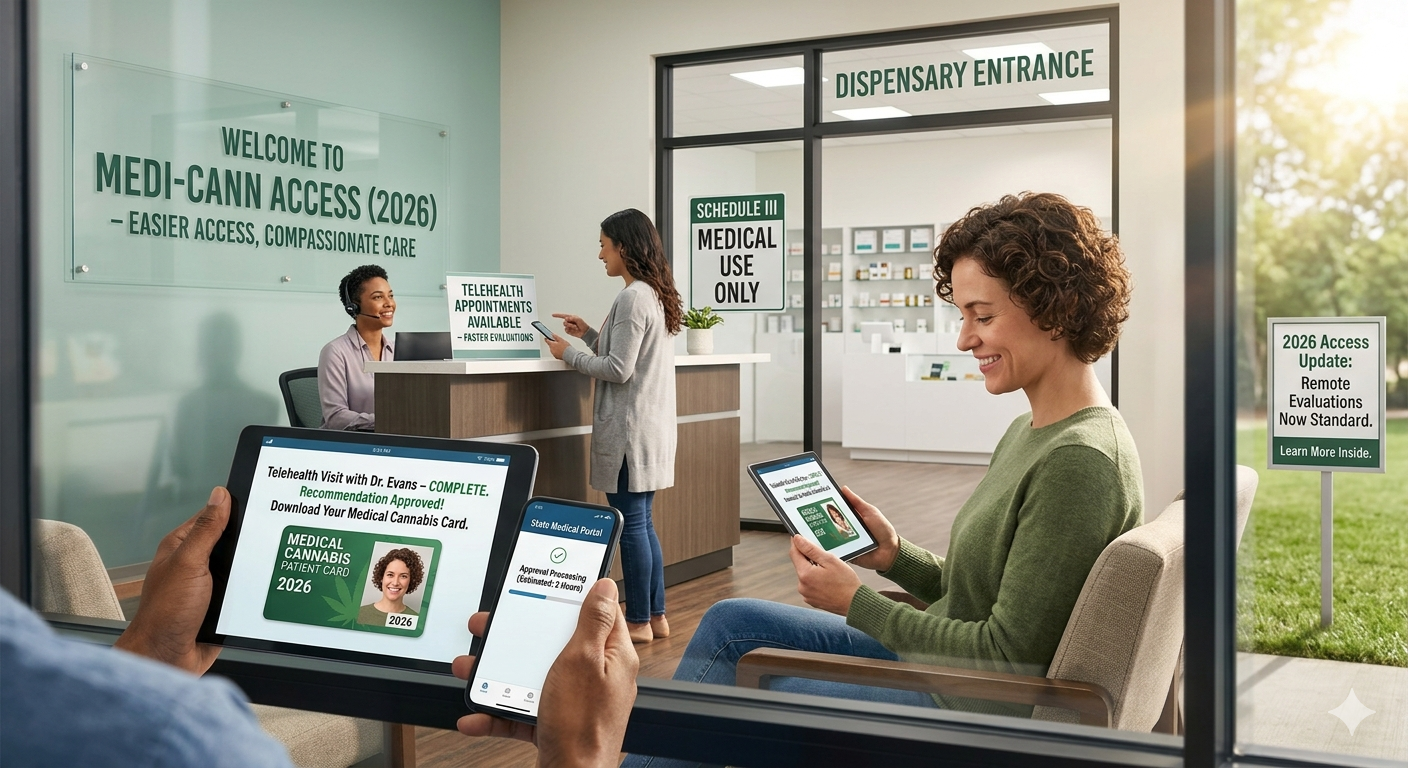
Traditionally, people had to see a healthcare professional. That healthcare professional would look at your condition. Give you a written certificate to join the state’s medical marijuana program. What if you need cannabis and you cannot get a meeting with your doctor? What if your medical marijuana certificate has ended?
Now there is a choice. Public Act 25-101 says that licensed dispensary pharmacists can now give marijuana certificates that are good for up to 90 days to people who are eligible. They can also give time to people whose medical marijuana certificates have ended.
This is very useful for people living in Connecticut. It offers a way for people who meet the requirements to get into the state’s cannabis program. Can any dispensary pharmacist approve your treatment? What makes you eligible? How much will it cost? What happens after 90 days? Let us look at the rules.
What Is Connecticut’s New Temporary Medical Marijuana Certification Rule?
In the past, patients needed a doctor, a physician assistant, or a practice-registered nurse to give them a medical marijuana certification. Thanks to Public Act 25-101, we can now issue a medical marijuana certification from a qualified pharmacist at a dispensary. This rule will start on January 1, 2026. Will make it easier for medical cannabis patients to get the medication they need.
Patients can get either a temporary medical marijuana certification or a temporary extension. A new temporary certification can be issued to adults who have not yet been certified through this route, and it is valid for up to 90 consecutive days. A temporary extension can be issued to existing marijuana patients whose original certification from their healthcare provider has expired, giving them up to 90 consecutive days to obtain a new certification. These are solutions.
Can a Dispensary Pharmacist Really Start Your Medical Marijuana Treatment?
Yes,. There are conditions. Connecticut law lets a qualified, licensed dispensary pharmacist do an assessment and give a certification. This means a patient doesn’t have to wait to see a doctor, PA, or APRN. This is only allowed for pharmacists working at a dispensary. Not in a regular pharmacy.
The pharmacist must have a Connecticut pharmacist license. They also need a sponsored Medical Marijuana Dispensary Registration. They must have a DEA registration number from the state. They need access to the online certification tool provided by Connecticut. Importantly, the pharmacist must meet with the patient in person at the dispensary or hybrid retail pharmacy where they work.
They must go over the patient’s history. They must make sure the patient has a qualifying debilitating condition. They must decide that the benefits of using medical marijuana are likely to be greater than the health risks. They also need to check the Prescription Monitoring Program in Connecticut. This is to make sure no other licensed dispensary has prescribed or given marijuana to that person in the year.
So while the new rule gives dispensary pharmacists responsibility, it doesn’t let them give a certification without doing a real medical assessment.
Who Qualifies for a 90-Day Temporary Certification?
I want to let you know that these new ways of getting certified may not apply to everyone living in Connecticut.
- To get a certification, you will need:
- To be 18 or older.
- To be a resident of Connecticut.
- To have a qualifying debilitating health condition.
- An in-person assessment by a dispensary pharmacist.
The pharmacist will have to meet any prescription monitoring requirements set by the state.
Those with Glaucoma will not be able to receive a certification from a dispensary pharmacist. They will need to receive certification from a physician. Those under 18 will also not qualify for a certification from a pharmacist. It is important to note that you will not be able to register using a provisional certification. A new patient will only be given one certification.
How Much Does a Temporary Medical Marijuana Certification Cost?
Another factor to consider with this regulation. In Connecticut, there are limits to how much the dispensary pharmacist can charge for issuing a certification. They can not charge more than twenty-five dollars. Dispensaries cannot charge any fees relating to issuing temporary certifications.
This can be particularly helpful for patients who require access to medical cannabis and do not wish to pay a large amount just for a temporary certification. Also, qualifying patients will not have to pay any registration fees to join Connecticut’s Medical Marijuana Program.
What Happens After the 90-Day Certification Expires?
This is probably one of the common questions many people ask. Pharmacist temporary certification can only last up to 90 days. Pharmacist temporary certification is not meant to replace treatment but to give temporary access. New patients should book an appointment with a doctor/PA/APRN to discuss their longer-term needs. In Connecticut, medical marijuana certifications can also be issued for 6 months, 1 year, 18 months, and 2 years by healthcare professionals.
If your original certification was issued by your healthcare provider and has now run out, then a pharmacist at the dispensary can issue a certification for up to 90 days. However if you have a temporary certification issued by a pharmacist pharmacist temporary certification cannot be extended. This is a point to note so you can plan for what you need to do once your temporary registration has run out.
How Does This Rule Benefit Connecticut Medical Marijuana Patients?
Improved Accessibility: Sometimes patients must wait to book an appointment. This wait is especially hard for patients who need to renew their certification. The new rule gives adults a different way to keep or start accessing medical cannabis.
The pharmacist at the dispensary now has an active role. Qualified pharmacists can now review patients’ history. Qualified pharmacists can decide if patients are eligible. Qualified pharmacists can explain any risks and benefits. Qualified pharmacists can give patients a certificate, fulfilling their legal duty. This is more than telling patients which product to take. The provisional pathway does not mean that patients should stop being under healthcare supervision. Patients must still talk with healthcare professionals, about patients’ treatment and patients’ progress.
Final Thoughts
The new provisional certification rules for marijuana in Connecticut are an important change. Starting on January 1st, 2026, eligible dispensary Pharmacists will be allowed to issue certifications that last up to 90 days. They will also be able to extend some certifications that have already expired.
This change makes it easier for patients to get access to cannabis. It’s also an option for those who have trouble scheduling appointments to get their certification from a doctor. There are limits. Only certain Pharmacists can issue these certifications. The process must be done in person. The certifications themselves are only valid for a short time. If you are thinking about trying marijuana treatment in Connecticut, knowing about this new rule helps you make better decisions when registering.
FAQ
Can I get a marijuana card at a dispensary?
If you are an adult who's eligible, a qualified and licensed dispensary pharmacist can give you a short-term certificate that is good for up to 90 days. This is possible if you have had a face-to-face evaluation and you are eligible to get treatment according to the state rules.
How long will my certificate last?
A new short-term certificate can be given for up to 90 days in a row.
What is the cost of a short-term certificate?
A dispensary can ask for a fee of twenty-five dollars. No other costs can be added.
Can patients under 18 years old get a short-term certificate?
No. This is for people who are 18 years old or older. If a young person wants to use the certificate process, there are more steps needed.
Can a pharmacist certify someone with glaucoma?
No. According to Connecticut rules, a dispensary pharmacist cannot give a short-term certificate to someone who has glaucoma. That person needs a certificate from a doctor who is allowed to do that.
Can existing patients get an extension?
Yes. Patients who have a certificate from their doctor that has expired can get an extension for up to 90 days in a row from a pharmacist who is allowed to do that.